Devices
The Devices section is where you browse the firewalls in the active organization, dig into any one of them, and trigger device-level actions like sync, restart, or open a remote terminal.
Devices list
Section titled “Devices list”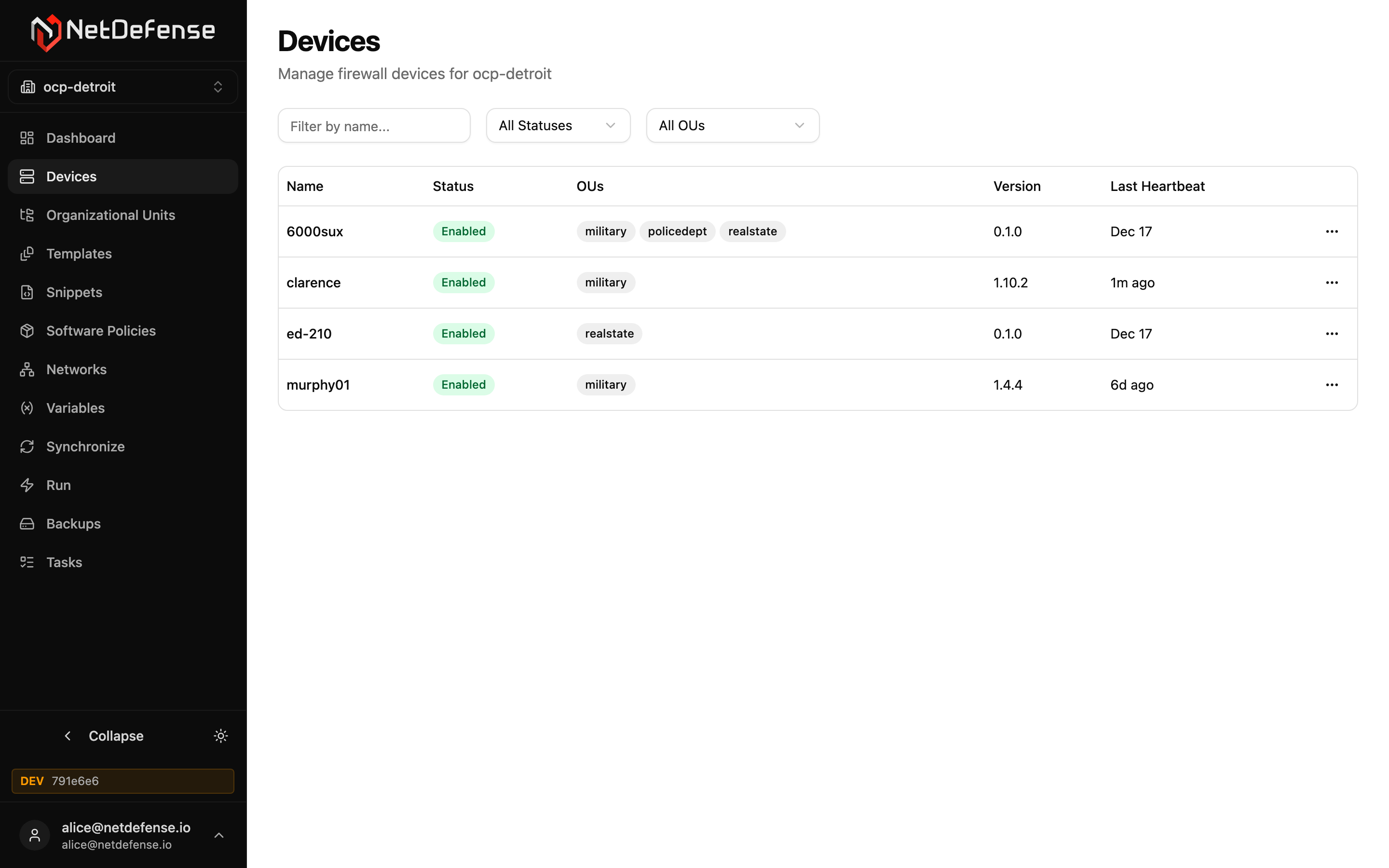
Each row is one enrolled device:
| Column | Meaning |
|---|---|
| Name | Friendly name set at enrollment. Click it to open the detail page. |
| Status | Enabled, Pending (awaiting admin approval), or Disabled. |
| OUs | Every organizational unit the device belongs to. |
| Version | Reported NDAgent version. Drift between devices is a hint to plan an update. |
| Last Heartbeat | How long ago the device checked in. A long gap means the device is offline. |
| Drift | Whether the device’s running configuration matches what NetDefense last delivered. Values: IN_SYNC, DRIFT, NEVER_SYNCED, UNKNOWN, ERROR. See Drift Detection. |
The filter bar above the table accepts a name substring and dropdowns for status, OU, and drift status. The … menu on each row exposes per-row actions: Approve, Rename, Delete.
Read about device approval, identity, and the v=2 rebind flow in Device Identity.
Device detail
Section titled “Device detail”Clicking a device opens its detail page.
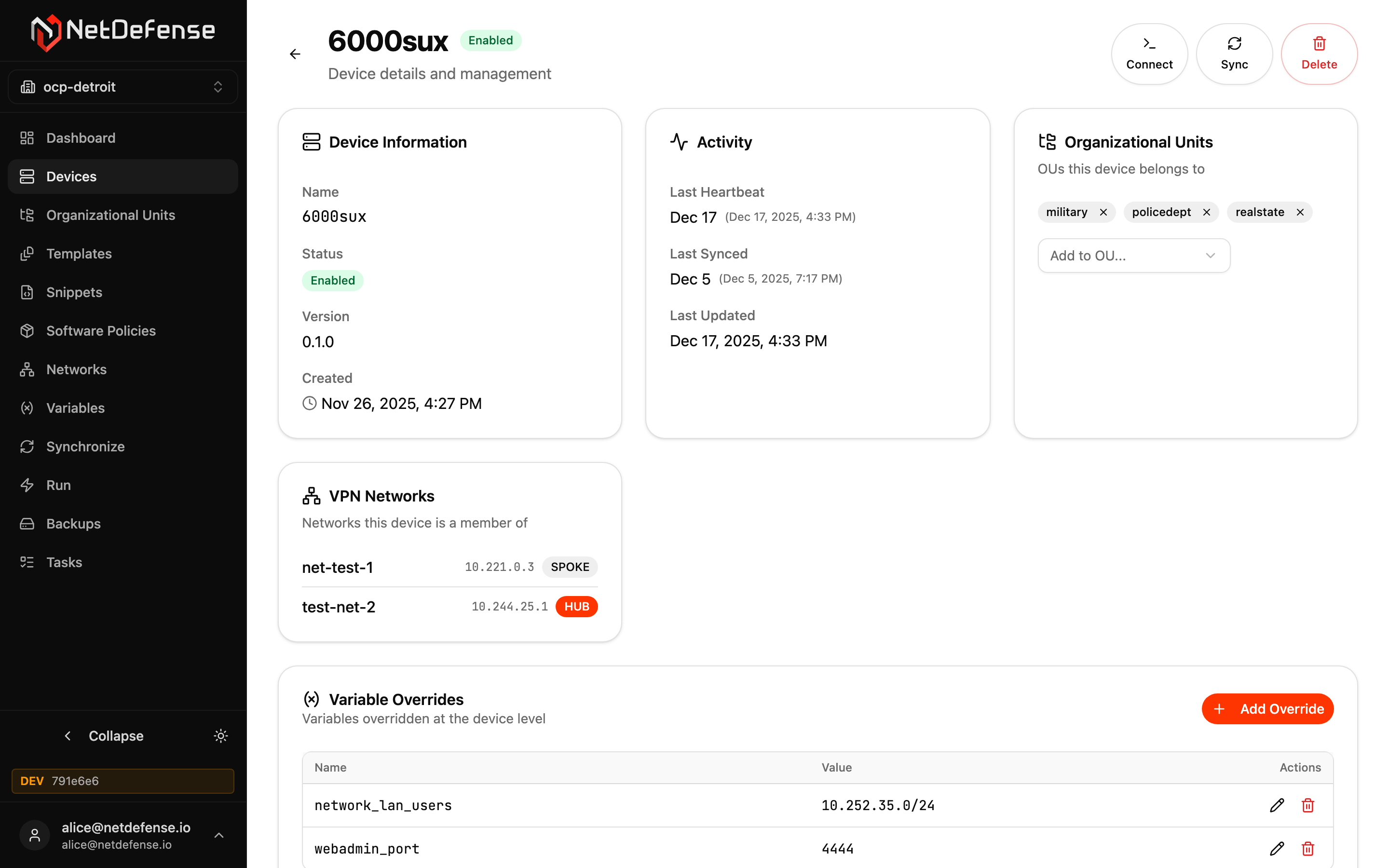
The header shows the device name, its current status badge, its drift status badge, and three action buttons:
- Connect — opens the browser-based access screen with a terminal and WebAdmin proxy for this device.
- Sync — pushes the current computed configuration to the device. The action is also available in bulk from the Synchronize page.
- Delete — removes the device from NetDefense. The device itself isn’t touched; only the control-plane record is removed.
Cards on the page:
Device Information — name, status, NDAgent version, the timestamp when the device was enrolled, and firmware status. When a firmware upgrade has been applied without a reboot (split-apply minor upgrade), the firmware status shows Update pending reboot until the device next restarts. Activity — last heartbeat, last successful sync, last config update, and current drift status. Organizational Units — the OUs this device belongs to, with chip-style removers and an Add to OU… picker. VPN Networks — every overlay network the device is a member of, with its overlay IP and a HUB/SPOKE badge. Variable Overrides — variables overridden specifically for this device. Click Add Override to override an organization-level variable for this device only; the pencil and trash icons edit and remove existing overrides. See Variables for the full scoping model.
Beyond the visible cards, the page scrolls to show the device’s recent task history.