Templates
Templates are named bundles of snippets. You assign templates to OUs or directly to devices, and NetDefense computes each device’s final configuration by merging every applicable template in the right order. Read the concept overview in Templates and Policy Chain.
Templates list
Section titled “Templates list”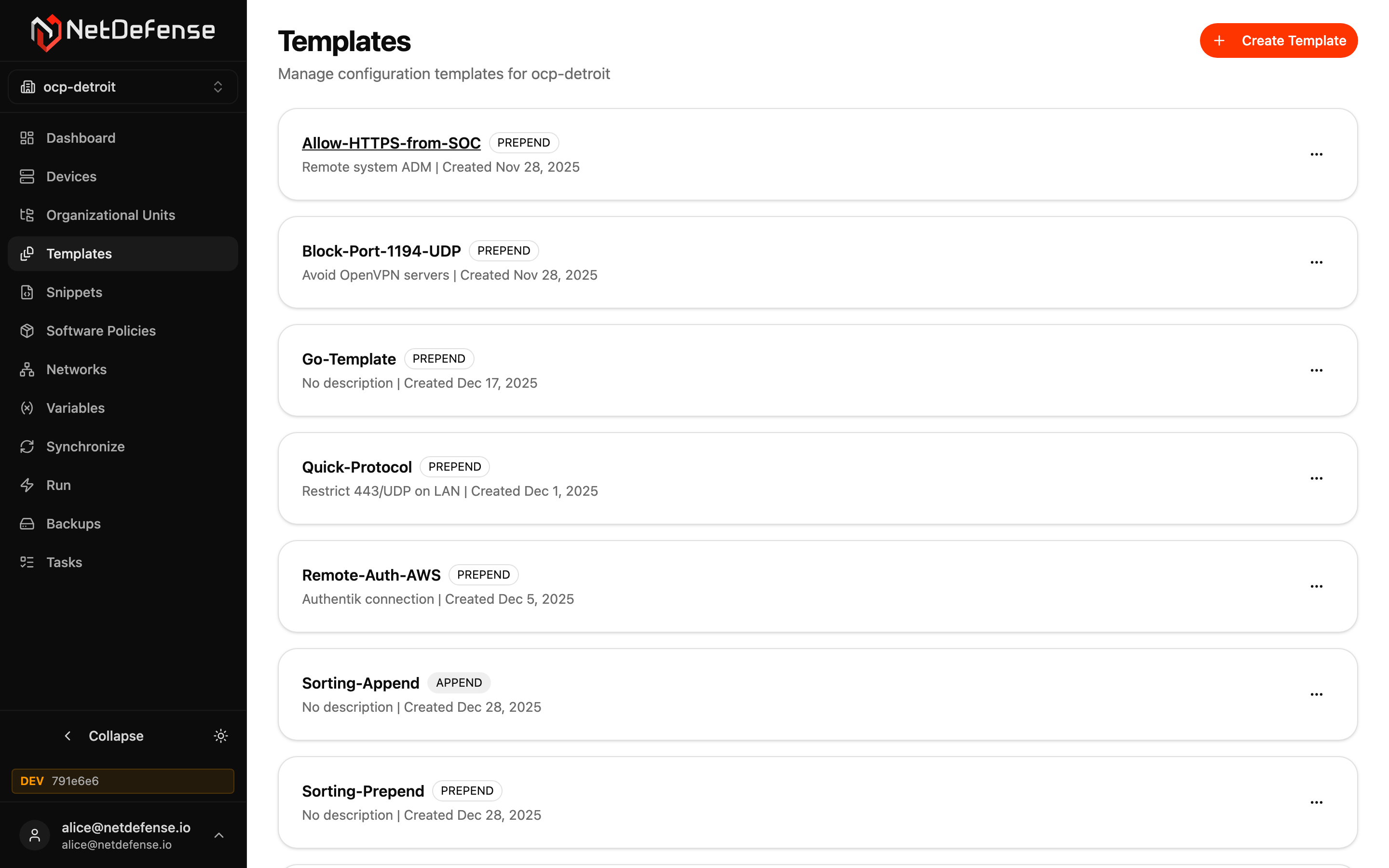
Each row is one template, with a colour-coded PREPEND or APPEND badge — that’s the template’s position in the policy chain. PREPEND templates run before the device’s base configuration; APPEND templates run after.
Each row’s … menu offers Edit, Duplicate, and Delete. Click the template name to open its detail page.
Use + Create Template to start a new one. You’ll need a name, a position, and an optional description; you can add snippets afterwards.
Template detail
Section titled “Template detail”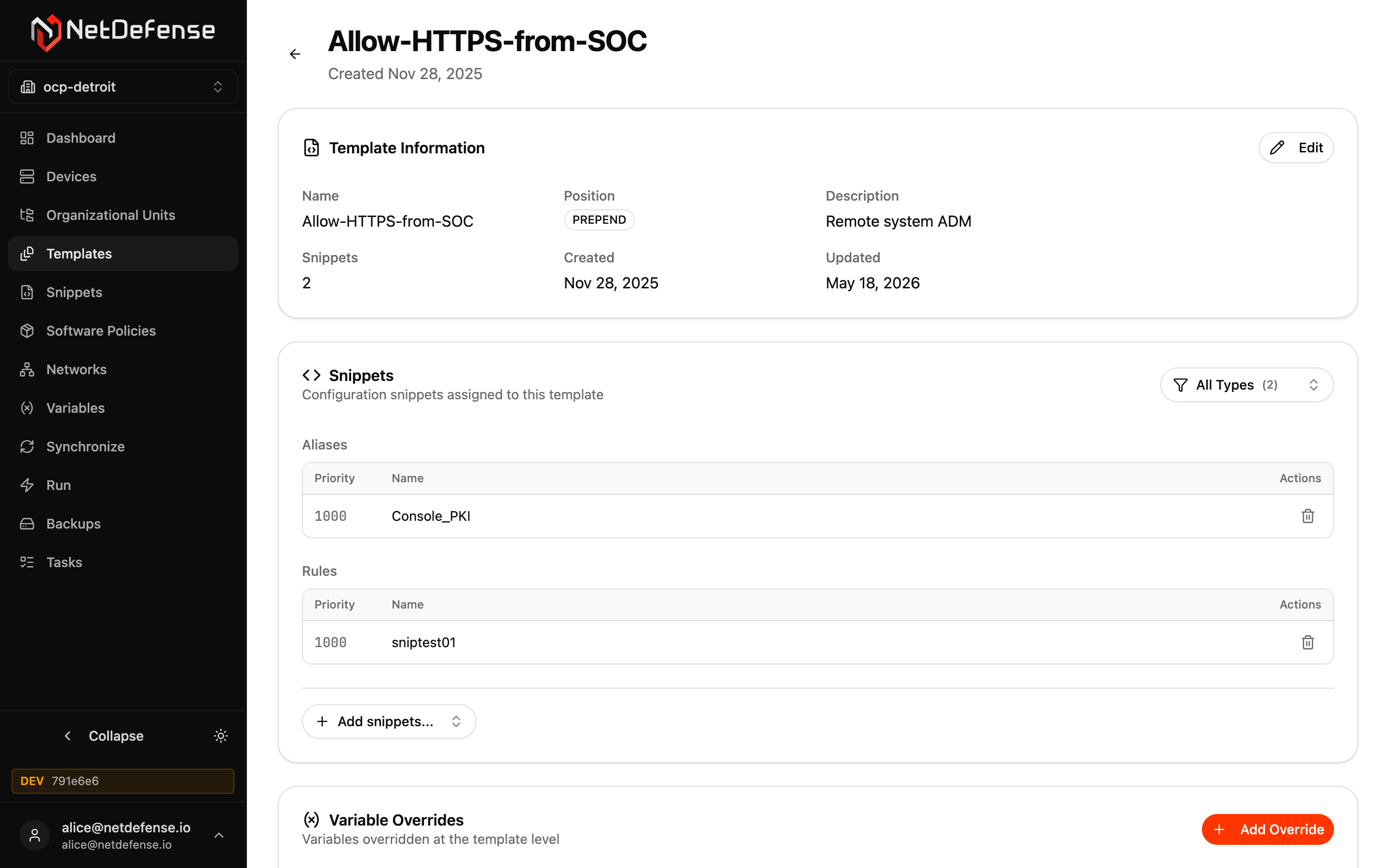
Template Information holds the metadata: name, position, description, and timestamps. Edit changes any of those except the chain position.
Snippets groups the assigned snippets by type (Aliases, Rules, Groups, Users, Host Overrides, etc.) and shows each with its priority and name. The lower the priority number the earlier it applies inside the template. Use the All Types filter to focus on one kind. + Add snippets… opens a multi-select picker scoped to the active organization; the trash icon detaches a snippet (the snippet itself is not deleted).
Variable Overrides sets variable values that apply when this template is computed — useful when a single template should ship with its own default for a parameter regardless of where it’s assigned. The standard precedence still applies: a device override beats an OU override which beats a template override which beats the organization default.
Scrolling further reveals Assignments — every OU and device this template is attached to.