Snippets
Snippets are the smallest unit of NetDefense configuration. Each one targets a single OPNsense concept — a rule, an alias, a group, a user, a host override — and ships its content as a JSON document the agent merges into the device’s config. Templates collect snippets; snippets stand on their own. The concept overview lives in Snippets.
Snippets list
Section titled “Snippets list”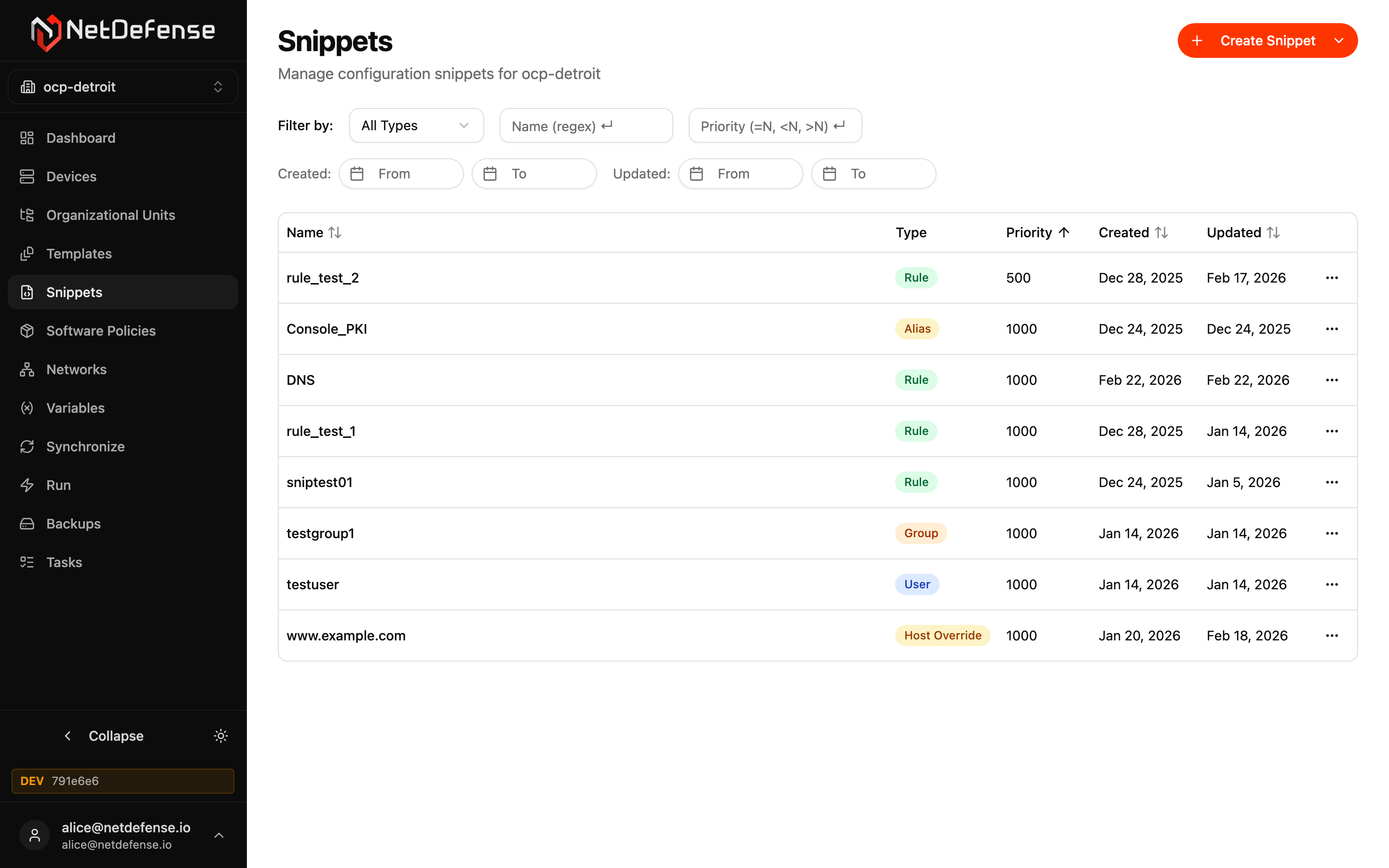
The table shows every snippet in the active organization with its type, priority (lower = applied first within its type), and creation/update timestamps. The filter bar above supports a type dropdown, a name regex, a priority comparator (e.g. <500), and date ranges for created/updated.
Each row’s … menu has Edit, Duplicate, and Delete; click the name to open the detail editor.
Create a snippet
Section titled “Create a snippet”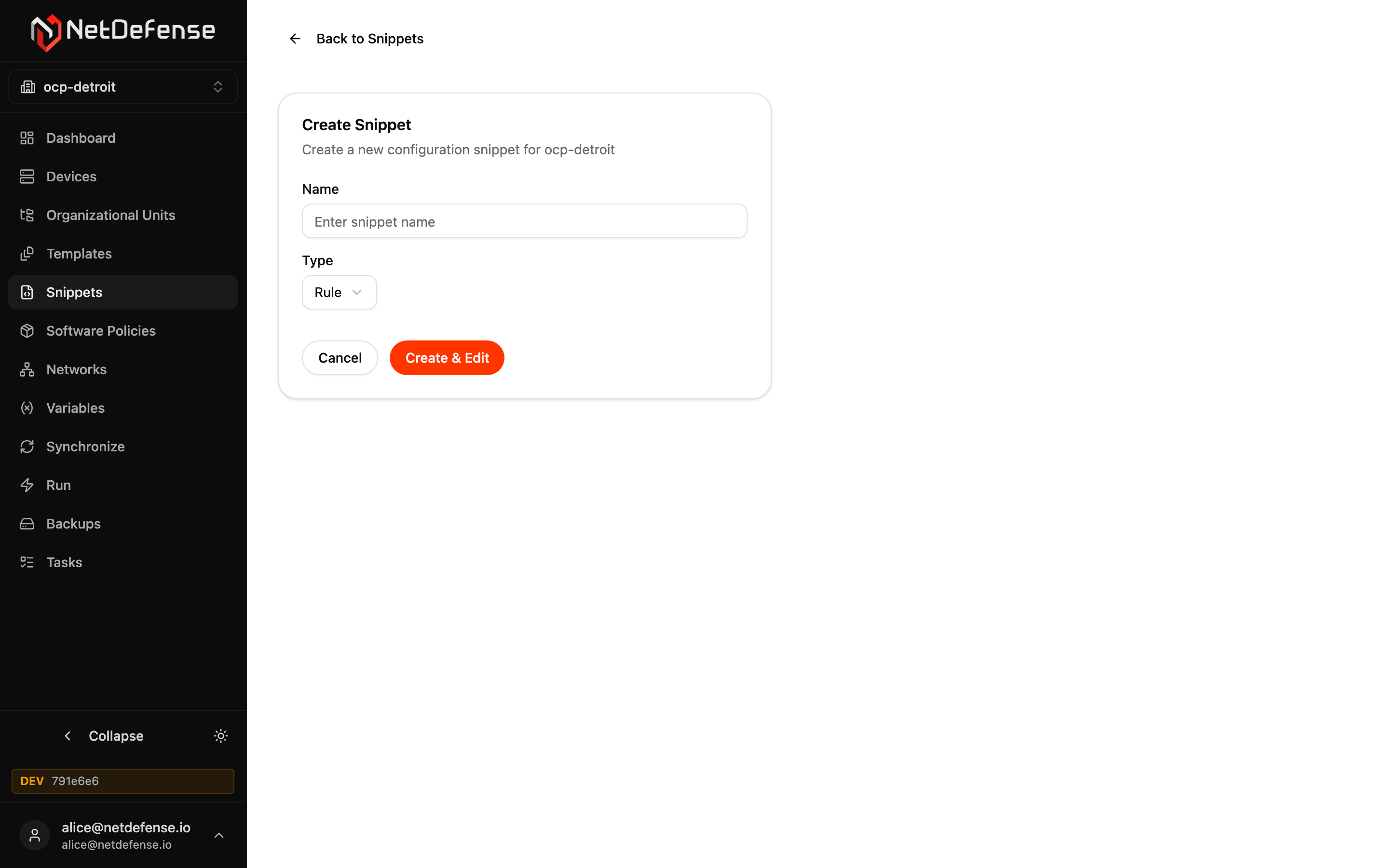
+ Create Snippet in the top-right opens the create form. You pick:
- Type — Rule, Alias, Group, User, Host Override, Unbound DNS host, etc. The type decides the JSON schema the agent expects.
- Name — must be unique within its type in the organization.
- Priority — integer that orders this snippet relative to others of the same type inside a template. Lower wins.
- Description — optional free text.
The lower half of the page is a Monaco-style JSON editor with NetDefense’s schema loaded — keys autocomplete, the Valid JSON badge in the gutter flips red the moment you break syntax, and Insert Variable drops in a {{var_name}} reference at the cursor.
Snippet detail
Section titled “Snippet detail”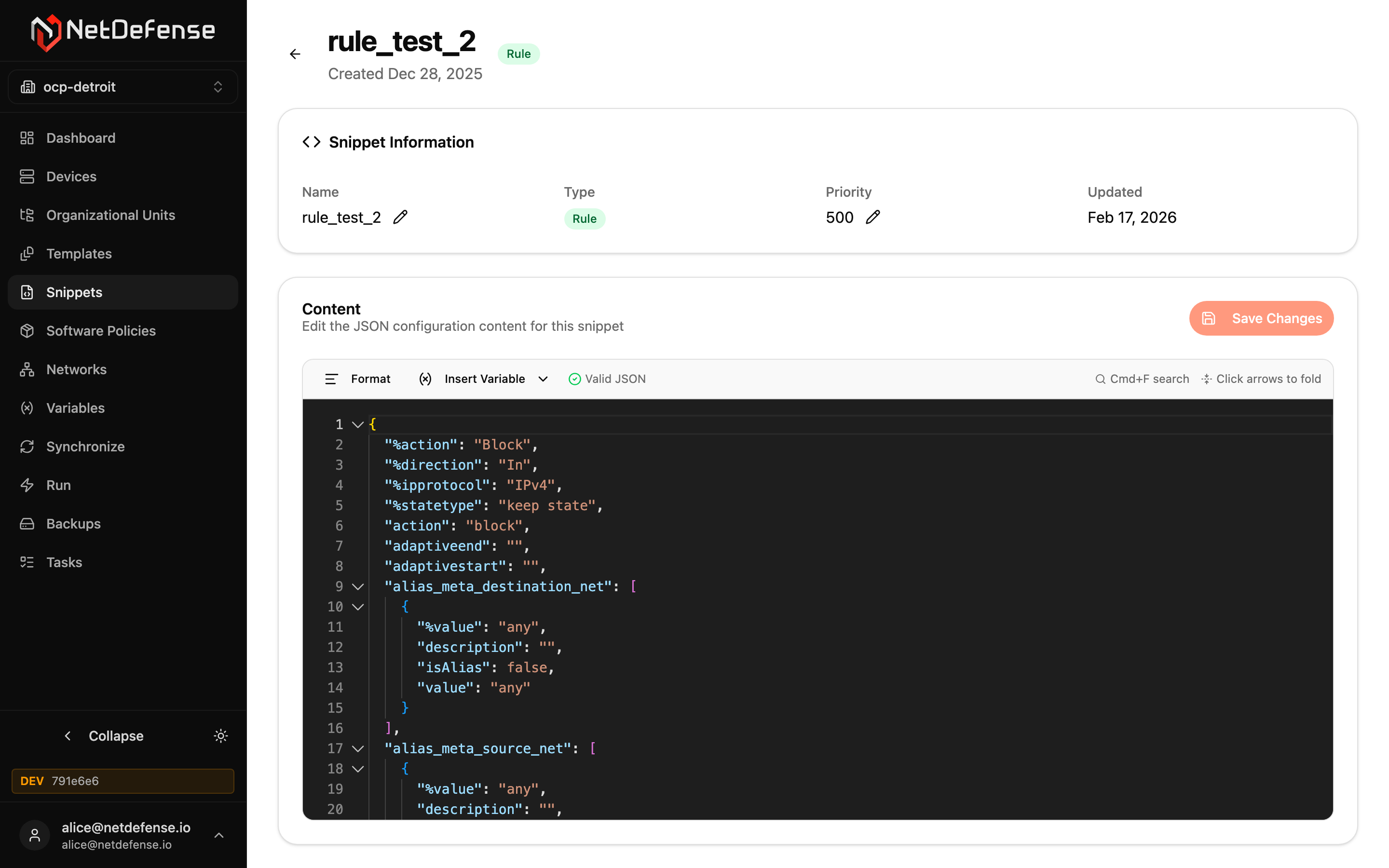
The detail page reopens the same editor against an existing snippet. Snippet Information edits the metadata; the Content card edits the JSON body. Save Changes persists the edit — it does not push the snippet to any device. The next time you sync a device that uses a template containing this snippet, the new content is bundled into the computed configuration.
Use Format (top-left of the editor) to pretty-print, Insert Variable to inject a variable reference, and Cmd+F / Ctrl+F for in-document search. The fold arrows on the gutter collapse nested objects so you can focus on one branch at a time.